Færð & Veður - Road conditions
Meðalheimur ehf.Weather
4.83.00 Reviews
- Version
- 2.0.0
- Installs
- 50.00K
- Age Rating
- Everyone
Screenshots
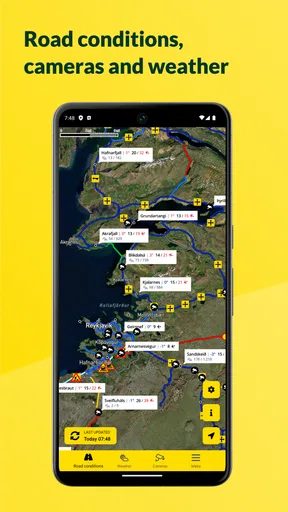
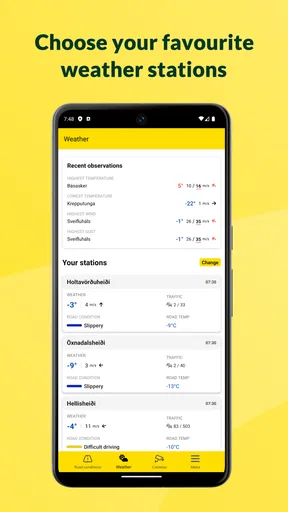
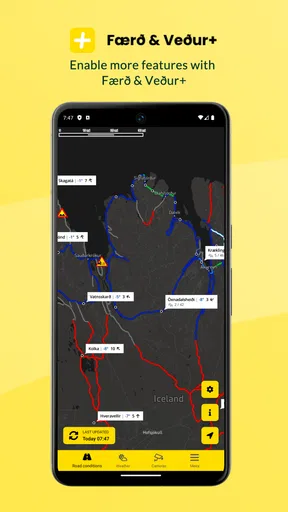
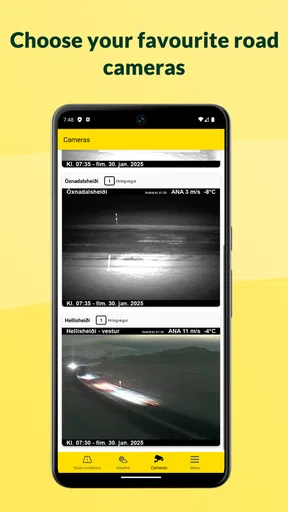
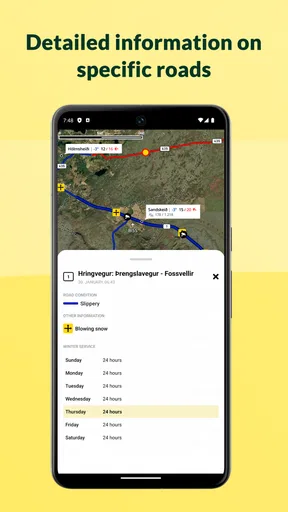
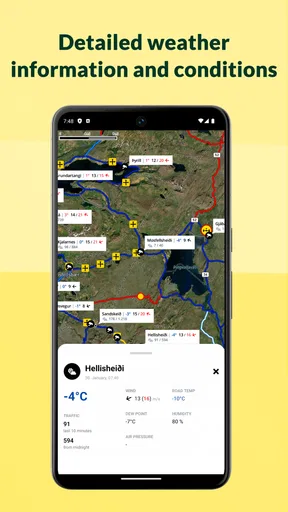
Our Review of Færð & Veður - Road conditions
 Analysis by Appyee
Checking Icelandic travel conditions can become a surprisingly repetitive task. Before leaving home, I may need to think about rain, wind, snow, road closures, visibility, and whether a route that looked simple on a map is sensible today. A general weather app can answer part of that question, while a map app can show the route, but neither is automatically built around the practical question I actually have: is this road and this weather combination suitable for my trip right now?
That is the problem Færð & Veður - Road conditions tries to reduce. It is a free weather app from Meðalheimur ehf. focused on Icelandic road and weather conditions, rather than attempting to be a universal forecast tool for every country. After using it as a travel-oriented utility, I found its main value less about entertainment or beautiful presentation and more about shortening the gap between checking the forecast and making a sensible decision.
The app has a 4.8 average from around 1.1 thousand ratings, and it has passed 50 thousand installs. Those figures suggest that it has found a clear audience among people who need Iceland-specific information. The age rating is Everyone, so it is suitable for a broad range of users, although the usefulness is naturally greatest for drivers, residents, hikers, and visitors planning journeys across Iceland.
Why an Iceland road check needs more than an ordinary forecast
My first impression is that the app makes sense because Icelandic travel decisions are unusually dependent on local conditions. A forecast that looks manageable in Reykjavík may not describe what awaits on a mountain pass, a remote coastal road, or an exposed stretch where wind changes the character of the journey. Even when the temperature is not extreme, wind, precipitation, darkness, and road surface can make a route feel completely different from the simple forecast symbol shown on a standard weather service.
This is where a dedicated road-and-weather app has an advantage over opening several unrelated services. Instead of treating weather as one question and roads as another, Færð & Veður places them in the same travel context. That does not remove the need for judgement, but it makes the initial check more focused. I can begin with the route I am considering instead of collecting fragments from different apps and trying to mentally combine them.
That distinction matters most when the trip is flexible. If I am deciding whether to leave early, wait until later, choose a different road, or cancel a detour, a compact Iceland-focused tool is more useful than a broad global weather app filled with information I do not need. It is also easier to build into a habit: check the app before departure, check it again if conditions change, and avoid assuming that yesterday’s road experience predicts today’s.
The first setup is useful when you treat it as a decision tool
The app does not need to become a complicated project. I would start by identifying the journey I actually intend to make, then use the road and weather information together rather than browsing randomly. The important habit is to check shortly before travelling, especially for longer drives, because Icelandic conditions can make an earlier impression obsolete.
A practical routine is to examine the route before packing the car, then repeat the check immediately before departure. If the trip crosses exposed or less familiar areas, I would also make a second check during a planned stop. This is one of the app’s less obvious strengths: it encourages a sequence of small decisions instead of one overconfident glance at a forecast. The app does not replace preparation, but it can make preparation faster and more consistent.
I also found it helpful to separate “can I technically drive this route?” from “will this be a comfortable and sensible drive for me?” Road information can support the first question, while weather details help answer the second. A confident local driver, a visitor in a rental car, and someone towing equipment may all interpret the same conditions differently. The app gives the information a traveller needs to begin that judgement, but it cannot make the personal decision on the user’s behalf.
Because the current version is 2.0.0 and the minimum requirement is Android 7.0, it should be accessible to people using older Android devices as well as newer phones. That is useful for travellers who keep a spare handset in a vehicle or do not upgrade frequently. I would still install and open it before setting out, rather than waiting until I am already somewhere with poor connectivity or limited battery.
A realistic morning before a long drive
Imagine planning a drive from the capital area toward a more remote destination. The route may look straightforward when viewed only as a line on a map. Before leaving, I would open Færð & Veður, inspect the road situation, and compare it with the weather expected along the journey. If the combination suggests a difficult trip, I can delay departure, shorten the plan, or choose a more conservative itinerary before committing time and fuel.
The time saved is not just the few seconds spent opening one app instead of two. The larger saving comes from reducing mental switching. I do not have to keep a weather forecast in one place, road information in another, and a map route in a third window while trying to remember which location each item describes. That reduction in friction is particularly valuable when travelling with family or friends, because the person driving can explain the decision more clearly: the issue is not simply that it might rain, but that the road and weather together may make the planned journey unwise.
On a changing day, I would use the app again before returning rather than assuming that the outward journey tells me anything about the trip back. This is another concrete workflow that a short store description would not reveal. A road can be acceptable in the morning and less attractive later because weather, light, fatigue, or visibility has changed. Treating the app as a departure-and-return check is more useful than treating it as a one-time travel accessory.
Useful for residents, visitors, and outdoor planners in different ways
For residents, the benefit is repetition. Someone who drives between towns, commutes through exposed areas, or regularly visits relatives outside the capital can turn the app into a quick pre-drive checkpoint. It is not necessary to study every detail every time; the value is having a focused place to look before making a familiar journey under unfamiliar conditions.
For visitors, the app can help correct a common mistake: assuming that a rental car and a clear map are enough preparation. Iceland is easy to explore in theory, but road confidence should come from current conditions rather than from a fixed itinerary. I would recommend it especially to travellers whose plans include long distances, changing elevations, or roads they have never driven before. It can help them question an ambitious schedule early, when changing the plan is still easy.
For hikers and photographers, the app is useful before the drive to a location, but it should not be mistaken for a complete outdoor safety plan. A road may be open while the conditions at a trailhead or on a route remain unsuitable. I would use the app to assess access and travel conditions, then apply separate judgement about clothing, daylight, navigation, communication, and personal ability. That boundary is important: road information supports an outing, but it does not guarantee that the activity itself is safe.
Where it removes friction better than general alternatives
The usual alternative is a general weather app combined with a mapping service and perhaps a separate browser search for road updates. That combination may offer broader forecasts, richer international coverage, or more familiar interfaces. It can be the better choice for someone travelling outside Iceland, comparing many countries, or needing advanced weather history and long-range planning.
Færð & Veður is more appealing when the question is narrowly Icelandic and immediate. I do not need worldwide coverage when I am deciding whether to drive from one Icelandic region to another today. A specialist tool can feel less cluttered because its purpose is clear. The trade-off is that it is not a replacement for every service on my phone. I would still keep a map for navigation and use other sources when I need information beyond road and weather conditions.
Another advantage is cognitive rather than technical. A general forecast often encourages users to focus on a single town or icon. A road-focused application encourages a route-based mindset. That is a better match for Icelandic travel, where the conditions between two points can matter as much as the conditions at the destination. I found that shift in perspective more valuable than any decorative interface feature.
There is also a useful distinction between planning and navigation. I would not expect this app to replace turn-by-turn directions, and I would not want it to. Its job is to help decide whether and when to travel. Once that decision is made, a navigation app can handle the route itself. Keeping those roles separate makes the overall workflow clearer and prevents the mistake of expecting one utility to do everything.
Small habits that make the information more useful
First, I would check the whole journey rather than only the first familiar section. The beginning of a drive may look fine while the more exposed portion presents the real concern. Second, I would repeat the check after a delay, because a plan made at breakfast should not automatically govern an afternoon departure. Third, I would include the return trip in the decision, particularly when travelling late in the day or when conditions are unsettled.
Fourth, I would avoid using a favourable reading as permission to ignore local signs or official instructions. The app is best treated as one informed input in a decision, not as a guarantee. If conditions on the ground look worse than expected, I would trust direct observation and responsible road guidance over the desire to preserve an itinerary.
Finally, I would use it to simplify group discussions. When several people are travelling together, uncertainty can lead to repeated arguments about whether to leave. A focused road-and-weather check gives the group a common starting point. It does not settle every question, but it moves the conversation from vague optimism to a more practical assessment of timing, route, and willingness to turn back.
What may frustrate you before it becomes a habit
The app’s narrow focus is also its main limitation. If you want an all-purpose weather service with broad international coverage, detailed lifestyle forecasts, or a complete navigation experience, this will not be enough on its own. Its value depends on caring about Icelandic road conditions specifically. Someone who rarely travels in Iceland may gain more from a familiar general-purpose app.
I also would not rely on a single screen for high-stakes travel decisions. Conditions can change, and no app can account perfectly for a driver’s experience, vehicle, fatigue, visibility, or the exact point where a road becomes uncomfortable. The dedicated focus makes checking easier, but it should not encourage false certainty. The best use is cautious and repeated, especially when the journey is optional.
The app is free to install, with in-app purchases listed from $2.99 to $29.99 per item. That makes the initial decision easy: I can try the core experience without paying upfront. However, anyone considering optional purchases should first decide whether the free experience already fits their needs and whether the extra value is relevant to their travel habits. I would not pay simply because an app is specialised; I would pay only if it removes a recurring inconvenience I genuinely face.
There is also a difference between popularity and personal fit. Its strong average rating and more than 50 thousand installs are encouraging, but they do not guarantee that every visitor will prefer its presentation or workflow. A user who wants polished global forecasting may find another service more comfortable. A user who repeatedly drives in Iceland is more likely to appreciate the focused purpose.
My verdict after using it as a travel checkpoint
Færð & Veður - Road conditions succeeds because it addresses a specific recurring problem instead of trying to become an entire travel platform. I like it as a quick Iceland-focused check before driving, particularly when the route is long, unfamiliar, or exposed to changing weather. The biggest benefit is the time and attention it saves by bringing road and weather considerations into the same decision.
I would recommend it to Iceland residents, rental-car visitors, and anyone planning journeys where road conditions matter more than a generic temperature forecast. I would also recommend using it as part of a simple routine: check before departure, check again if the plan changes, and reassess the return journey. That workflow gives the app a practical role without asking it to do more than it should.
I would skip it if I need a worldwide weather companion, detailed navigation, or a complete outdoor safety system in one package. In those cases, a broader alternative may be better, with this app serving only as an additional Iceland-specific reference if needed. For the right audience, though, its focused purpose is exactly the point.
Released on January 3, 2022, and developed by Meðalheimur ehf., it remains a sensible utility for people who want a faster way to think about Icelandic travel conditions. My recommendation is positive but practical: install it before the journey, use it repeatedly rather than ceremonially, and combine its information with common sense and current on-the-road judgement. That is where it delivers its real value.
Verdict
Strengths of Færð & Veður - Road conditions
- Combines road conditions and weather information in one app.
- Useful for planning journeys across Iceland before leaving.
- Provides practical updates for drivers in changing conditions.
- Simple layout makes key travel information easy to find.
- Helpful for checking conditions on remote routes and mountain roads.
Limitations of Færð & Veður - Road conditions
- Information may depend on timely reports from local authorities.
- Coverage and detail can vary between roads and regions.
- Some conditions may change faster than the app updates.
- Primarily useful in Iceland, with limited value elsewhere.
- Requires an internet connection for the latest updates.
Similar Picks in This Category
View All
Weather - By Xiaomi
Xiaomi Inc.4.1

Weather & Radar Forecast
WetterOnline4.8

Weather
OneLouder Apps4.6

AccuWeather: Weather Radar
AccuWeather3.6

The Weather Channel - Radar
The Weather Channel4.6

1Weather Forecasts & Radar
OneLouder Apps4.3
Frequently Asked Questions
What is Færð & Veður - Road conditions used for?
Færð & Veður - Road conditions is designed to help users check driving conditions and weather information before traveling, particularly in Iceland. It can provide useful details about road accessibility, closures, surface conditions, wind, temperature, and other weather-related factors. The app is especially helpful for planning longer journeys, winter driving, and routes where conditions can change quickly.
Does the app provide real-time road condition information?
The app is intended to display current or recently updated information about road conditions, but users should remember that updates depend on the availability and timing of data from official sources. Conditions can change rapidly because of snow, ice, wind, flooding, or poor visibility. Always check the information shortly before departure and continue to follow road signs and official travel warnings.
Can I use Færð & Veður - Road conditions to plan a route?
Yes, the information presented by the app can be useful when deciding whether a planned journey is suitable and which roads may require extra caution. It can help you compare conditions along different parts of a route and identify possible closures or difficult sections. However, it should be treated as a planning aid rather than a complete navigation replacement.
Does Færð & Veður - Road conditions require an internet connection?
An internet connection will generally be needed to load the latest road and weather data, maps, warnings, or condition reports. If you lose connectivity while traveling, previously loaded information may no longer reflect the current situation. For remote trips, it is sensible to check conditions in advance, save important details where possible, and avoid relying on the app as your only source of information.
Is Færð & Veður - Road conditions suitable for all drivers?
The app can be useful for residents, tourists, commuters, and anyone traveling by car in areas affected by changing weather and road conditions. Nevertheless, the information does not replace careful driving, suitable tires, emergency supplies, or local knowledge. Drivers should adjust their speed to the conditions, respect closures and warnings, and postpone travel when authorities advise against it.
